
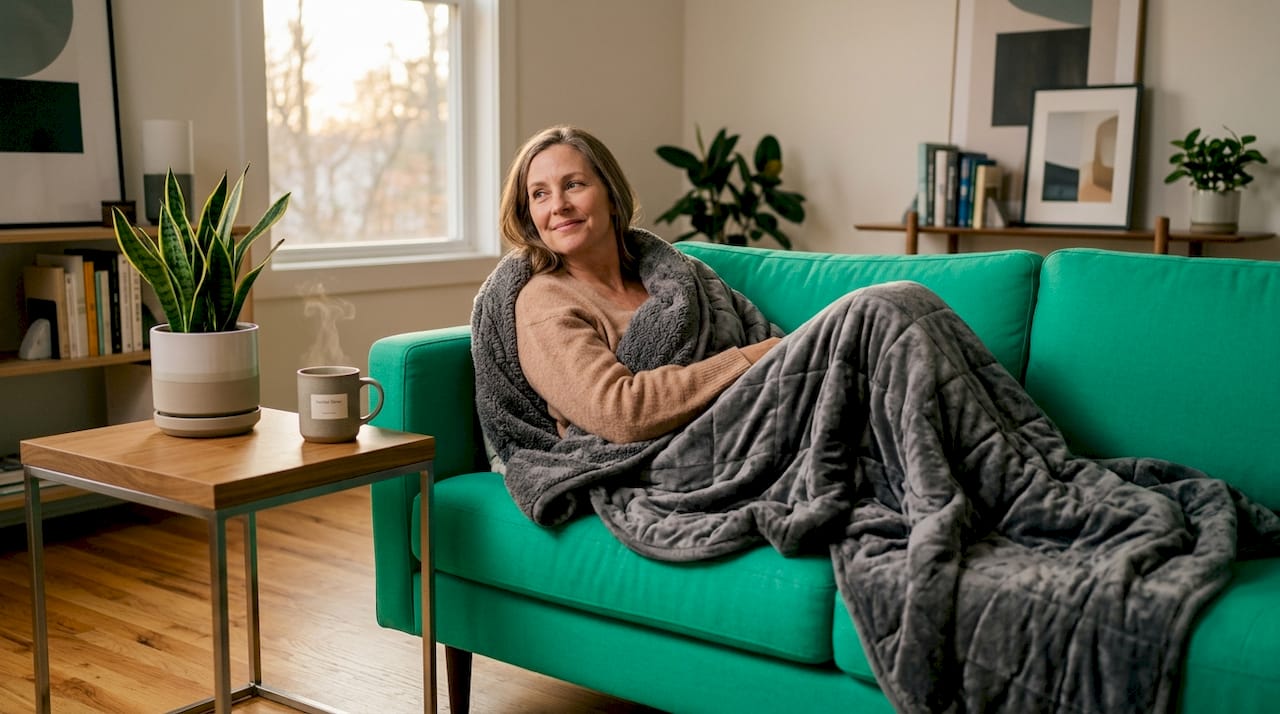
The Role of Deep Pressure Stimulation for Stress Relief
Deep pressure stimulation is a therapeutic technique that applies firm, gentle pressure to the body to shift the autonomic nervous system from sympathetic activation toward parasympathetic calm. The role of deep pressure stimulation extends well beyond simple relaxation. It directly influences neurotransmitter release, sensory regulation, and sleep quality, making it relevant for anyone managing anxiety, sensory processing differences, or chronic stress. Tools like weighted blankets, compression vests, and lap pads deliver this pressure in practical, accessible ways. This article breaks down the science, the benefits, and how to use these techniques effectively.
How deep pressure stimulation affects the nervous system
Deep pressure stimulation works by activating specialized sensory receptors in the skin and muscles called mechanoreceptors. These receptors detect sustained, firm pressure and send signals through the peripheral nervous system to the brain, triggering a cascade of calming responses. The vagus nerve plays a central role in this process, carrying parasympathetic signals that slow heart rate, lower blood pressure, and reduce the body’s overall stress response.
The biological effects are measurable. Serotonin and dopamine release occurs when mechanoreceptors are activated, and cortisol levels drop as the parasympathetic nervous system takes over from the sympathetic “fight or flight” state. This is why a weighted blanket can feel almost sedating within minutes of use. The body interprets the steady, predictable pressure as a signal of safety.
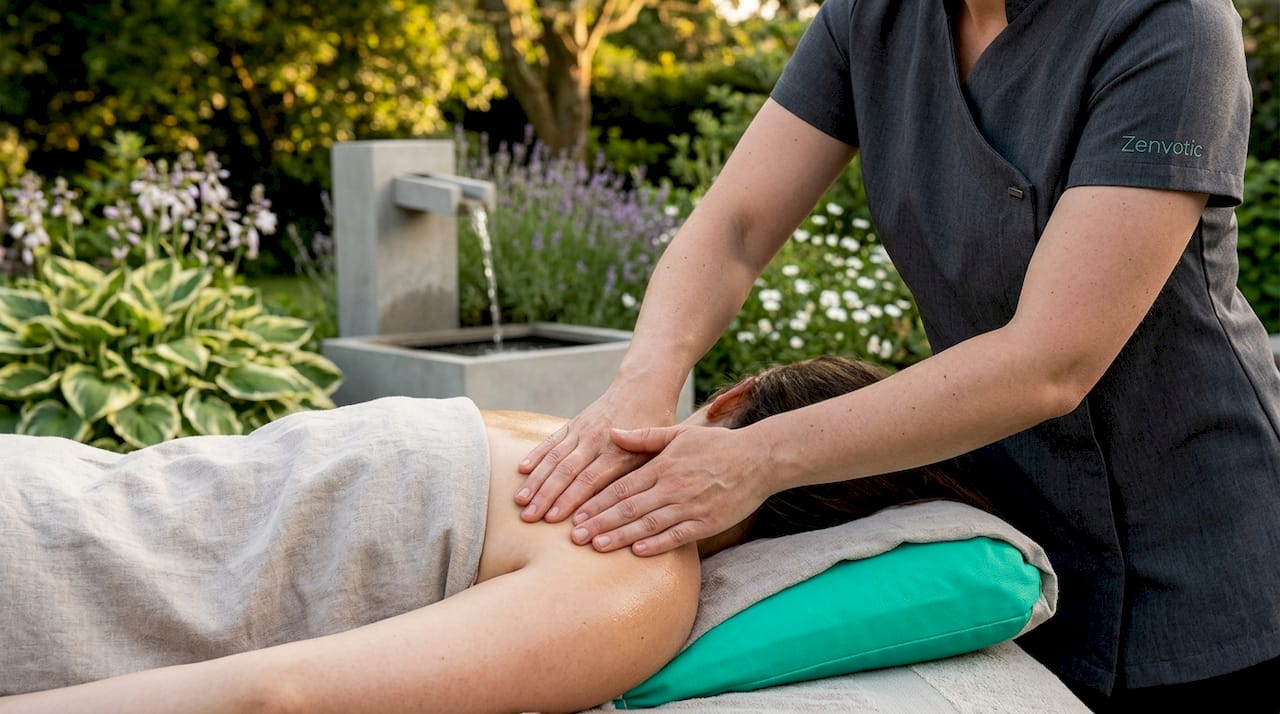
What makes deep pressure stimulation distinct from light touch is the quality of the input. Light touch, particularly unpredictable or unexpected contact, can actually increase arousal and anxiety in some individuals. Firm, steady proprioceptive input sends a fundamentally different message to the nervous system. This distinction matters especially for people with sensory processing differences, where light touch may be aversive but deep pressure is calming.
Pro Tip: Apply deep pressure during moments of rising stress rather than waiting until you are fully overwhelmed. Research confirms that timing during dysregulation enhances the calming benefit significantly.
Key physiological changes triggered by deep pressure stimulation include:
- Reduced cortisol production, lowering the body’s primary stress hormone
- Increased serotonin, which supports mood stability and sleep onset
- Dopamine release, which improves motivation and emotional regulation
- Parasympathetic nervous system dominance, slowing heart rate and breathing
- Decreased sympathetic arousal, reducing the physical symptoms of anxiety
What are the documented benefits of deep pressure stimulation?
The benefits of deep pressure stimulation are documented across several populations and conditions. For anxiety, studies show a 28% reduction in anxiety scores among individuals with generalized anxiety disorder using deep pressure stimulation. That is a clinically meaningful reduction, comparable to some behavioral interventions, without pharmacological side effects.
Sleep improvement is another well-supported benefit. Weighted blankets, one of the most common deep pressure tools, improve sleep efficiency by 35% in studied populations. Better sleep efficiency means less time lying awake and more time in restorative sleep stages. For anyone dealing with insomnia linked to anxiety or sensory overload, this is a practical, low-barrier intervention worth considering.
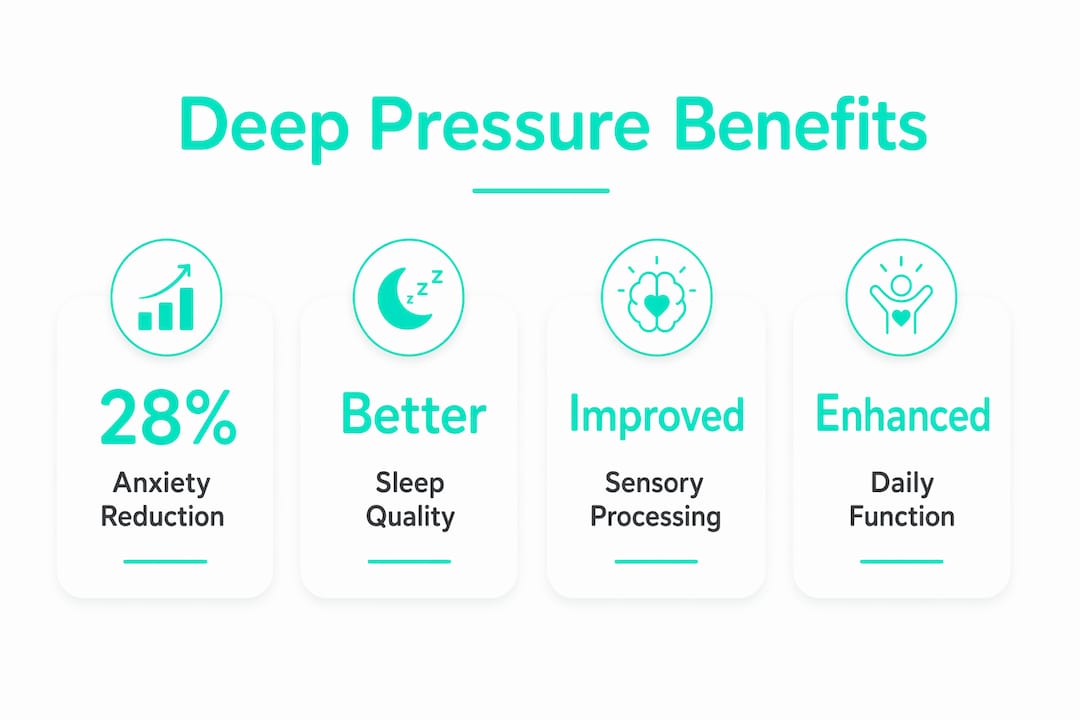
For individuals with autism spectrum disorder and ADHD, the benefits of deep pressure extend into daily functioning. Occupational therapists and families report reduced hypersensitivity, improved tolerance of sensory-rich environments, and better emotional regulation with consistent use. The evidence for sensory regulation in autistic individuals is among the most developed in this field, though researchers note that individual responses vary considerably.
A 2026 registered clinical trial called Sweet BEAD is currently evaluating weighted blanket interventions for ADHD and sleep disturbances in children over a 28-day protocol. The mechanism under investigation is arousal modulation through proprioceptive input. Results are pending, but the trial’s existence signals that the scientific community is taking deep pressure seriously as a clinical tool.
Documented benefits across populations include:
- Anxiety reduction: Measurable decreases in self-reported and physiological anxiety markers
- Improved sleep: Faster sleep onset and higher sleep efficiency with weighted blankets
- Sensory regulation: Reduced hypersensitivity and better tolerance of stimulating environments
- Focus and attention: Weighted lap pads used in classroom settings improve on-task behavior in students with ADHD
- Emotional regulation: Fewer meltdowns and faster recovery from sensory overload in autistic individuals
A broader meta-analysis across 116 reviews of sensory interventions found anxiety reduction effect sizes in the moderate to large range, with a standardized mean difference of negative 0.83. This places sensory calming approaches like deep pressure stimulation among the more effective non-pharmacological options for anxiety management.
Comparing common deep pressure stimulation methods and tools
Not all deep pressure techniques deliver the same experience. The right tool depends on your body size, sensory preferences, environment, and the specific outcome you are targeting.
| Tool | Best for | Pressure type | Practical consideration |
|---|---|---|---|
| Weighted blanket | Sleep, general anxiety, home use | Full-body, distributed | Choose 10% of body weight as a starting point |
| Compression vest | Sensory processing, daytime use | Torso-focused, consistent | Worn for 20-minute intervals; avoid all-day use |
| Weighted lap pad | Focus, classroom or desk settings | Localized, lower body | Portable and discreet for school or office |
| Self-massage techniques | Immediate stress relief, travel | Variable, user-controlled | Firm circular pressure on arms, legs, or shoulders |
| Compression clothing | Adults with sensory needs, exercise recovery | Full limb or body coverage | Athletic compression gear doubles as a sensory tool |
Weighted blankets and compression clothing are the most widely used tools across the lifespan, covering applications from childhood sensory support to adult insomnia management. Weighted lap pads occupy a practical middle ground, offering focused pressure without the full commitment of a blanket, which makes them popular in educational settings.
Pro Tip: When selecting a weighted blanket, avoid going heavier than 10% of your body weight. Excess weight can feel restrictive rather than calming, and may actually increase discomfort in individuals with sensory sensitivities.
Self-massage techniques are underrated as a portable deep pressure option. Firm, slow circular pressure applied to the forearms, thighs, or shoulders activates the same mechanoreceptors as external tools. This makes them useful in situations where carrying equipment is not practical, such as during a stressful meeting or while traveling.
When deep pressure stimulation may not be suitable
Deep pressure stimulation is not universally beneficial, and recognizing the limits of this approach is as important as understanding its strengths. Some individuals experience tactile hypersensitivity so pronounced that any firm pressure feels aversive rather than calming. For these individuals, forcing deep pressure exposure can increase distress rather than reduce it.
Individual responses to deep pressure therapy depend heavily on baseline arousal levels and pre-existing sensory preferences. Someone who finds touch generally uncomfortable may need a gradual desensitization approach before deep pressure tools become tolerable. Rushing this process undermines the therapeutic goal.
Situations and populations requiring extra caution include:
- Individuals with tactile defensiveness or severe sensory hypersensitivity
- People with circulatory conditions, skin fragility, or respiratory issues where pressure may be contraindicated
- Young children, where weight and pressure must be carefully calibrated to body size
- Anyone who has experienced trauma linked to physical restraint or unwanted touch
One critical terminology distinction: deep pressure stimulation is not the same as deep brain stimulation. Deep brain stimulation uses surgically implanted electrodes to modulate neural circuits for conditions like Parkinson’s disease and chronic pain. Deep pressure stimulation is entirely external, non-invasive, and works through tactile and proprioceptive pathways. Confusing the two leads to wildly mismatched expectations about what deep pressure can and cannot do.
Deep pressure stimulation is best understood as a low-risk adjunct intervention, not a standalone cure. It works best alongside occupational therapy, behavioral strategies, sleep hygiene practices, and other evidence-based approaches.
How to incorporate deep pressure stimulation into your wellness routine
Building deep pressure stimulation into a daily routine does not require a clinical setting. The process works best when it is gradual, monitored, and adjusted based on your actual response rather than a fixed protocol.
-
Start with a tolerability check. Before committing to a weighted blanket or compression vest, test your comfort with firm self-massage or a heavy throw blanket. If the sensation feels calming rather than irritating, you are likely a good candidate for deeper pressure tools.
-
Consult an occupational therapist if you have sensory processing differences. Occupational therapists specialize in sensory diets, which are structured plans that integrate deep pressure and other sensory inputs throughout the day. A professional assessment prevents guesswork and reduces the risk of overstimulation.
-
Time your sessions strategically. Effective deep pressure application works best during moments of escalating arousal, not after you have already reached a calm baseline. Use your weighted blanket when you first notice anxiety rising, not as a reward after you have already settled.
-
Track your outcomes. Keep a simple log of anxiety levels, sleep quality, and sensory tolerance for two to four weeks after introducing deep pressure tools. Patterns in the data tell you whether the intervention is working and whether adjustments are needed.
-
Combine with complementary strategies. Pair deep pressure with controlled breathing, reduced environmental stimulation, or mindfulness practices. The combined effect on the parasympathetic nervous system is greater than any single approach alone.
Pro Tip: For sleep applications, put on your weighted blanket 20 to 30 minutes before your target sleep time. This gives the parasympathetic nervous system time to shift into a lower arousal state before you attempt to fall asleep.
You can also explore sensory support options that align with clinical intervention contexts, particularly if you are researching tools for a child or family member with ADHD or sleep disturbances.
Key takeaways
Deep pressure stimulation activates the parasympathetic nervous system through mechanoreceptor input, producing measurable reductions in anxiety, cortisol, and sleep disruption across multiple populations.
| Point | Details |
|---|---|
| Nervous system mechanism | Deep pressure activates mechanoreceptors, triggering serotonin, dopamine release and cortisol reduction. |
| Anxiety and sleep benefits | Studies show 28% anxiety score reduction and 35% improved sleep efficiency with consistent use. |
| Best tools by use case | Weighted blankets suit sleep; compression vests suit daytime sensory needs; lap pads improve focus. |
| Timing matters | Apply pressure during rising arousal, not after calm is already established, for maximum effect. |
| Not a standalone solution | Deep pressure works best alongside occupational therapy, behavioral strategies, and sleep hygiene. |
Why I think most people underestimate the timing factor
After spending considerable time reviewing the research and observing how people actually use deep pressure tools, the single most common mistake is treating weighted blankets and compression vests like passive comfort objects rather than active nervous system interventions. People throw on a weighted blanket after they are already exhausted and then wonder why the results feel inconsistent.
The research is clear on this point: the nervous system responds most strongly to deep pressure input when it is already trending toward dysregulation. That is the window where the parasympathetic shift is most pronounced. Using a weighted blanket when you are already calm produces a much smaller physiological response than using it at the first sign of anxiety or sensory overload.
I also think the field undersells individual variability. Two people with identical diagnoses can have opposite responses to the same weighted blanket. One finds it grounding and sleep-inducing. The other finds it suffocating. Neither response is wrong. It reflects genuine differences in baseline sensory thresholds, trauma history, and autonomic nervous system regulation. The practical implication is that no one should give up on deep pressure stimulation after one bad experience with a single tool. The method may be right even when the specific product is not.
The emerging clinical trial data, including the Sweet BEAD trial running through 2026, will sharpen our understanding of which populations benefit most and under what conditions. For now, the evidence supports cautious optimism combined with personalized, adjustable approaches. If you are working with a child or managing your own sensory needs, start low, go slow, and track what actually changes.
— Zeeshan
Find the right deep pressure tools at Zenvotic
Zenvotic carries a curated selection of wellness products designed around the same principles that make deep pressure stimulation effective: consistent, body-safe pressure that supports recovery and everyday comfort. Whether you are looking for relaxation aids that complement a sensory routine or physical supports that reduce daily discomfort, the Zenvotic wellness collection offers options built with medical-grade materials and backed by a 30-day money-back guarantee. You can also browse the full Zenvotic shop to find tools that match your specific wellness goals, from stress relief to sensory support and beyond.
FAQ
What is the role of deep pressure stimulation?
Deep pressure stimulation shifts the autonomic nervous system from sympathetic to parasympathetic activation by engaging mechanoreceptors through firm, steady pressure. This produces calming effects including reduced cortisol, increased serotonin, and lower anxiety.
Is deep pressure therapy effective for anxiety?
Research shows a 28% reduction in anxiety scores among individuals with generalized anxiety disorder using deep pressure stimulation. Effect sizes across sensory intervention studies are in the moderate to large range, making it one of the stronger non-pharmacological options available.
How does deep pressure stimulation help with sensory processing?
Deep pressure delivers steady proprioceptive input that reduces hypersensitivity and improves tolerance of stimulating environments. Occupational therapists use it as part of sensory diets for individuals with autism, ADHD, and sensory processing differences.
What is the difference between deep pressure stimulation and deep brain stimulation?
Deep pressure stimulation is an external, non-invasive technique using tactile pressure to activate calming sensory pathways. Deep brain stimulation is a surgical procedure using implanted electrodes to modulate neural circuits for neurological conditions like Parkinson’s disease.
How heavy should a weighted blanket be for deep pressure therapy?
The standard guideline is approximately 10% of the user’s body weight. Going significantly heavier can feel restrictive rather than calming and may be counterproductive, particularly for individuals with sensory sensitivities.